

You look up a new word in an online dictionary, say "entrepreneur" or "development", just to know how to say it in your next meeting. And instead of a simple guide, you find a line of strange symbols that look like Egyptian . These symbols belong to the International Alphabet, or IPA, a system created in the late 1800s to write down the sounds of every language in the world, one symbol for each sound. For many learners today, reading them feels a bit like a ship by the stars. Before GPS, sailors looked up at the night sky to find their way across the ocean. It was a vital art, and it worked. So is reading these symbols today like reading the stars in the past—an old craft we no longer need? Or can they still show us the way?
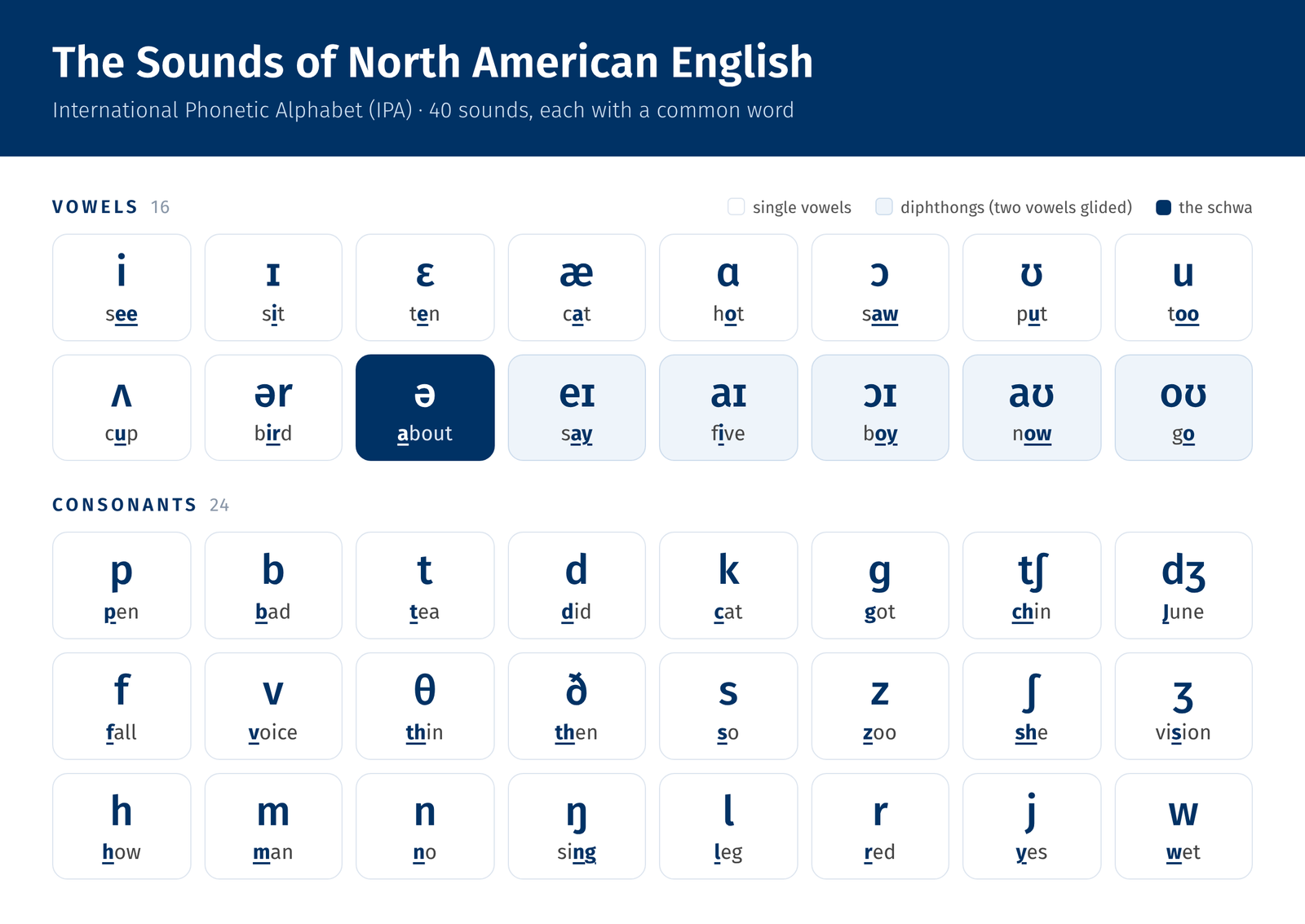
Today, we can find these symbols gathered in a chart, which exists in two forms: on paper, and online, where many websites offer clickable versions: you click a symbol and you hear the sound. We have gathered the best of them in our Top-10 list of interactive IPA charts & sound libraries. In this article, we are focusing on North American English. Interestingly enough, no one knows exactly how many and of English there are in the world, and the numbers vary from one source to another. Glottolog, a database of the world's languages from the Max Planck Institute, lists 115 dialects of English (Hammarström et al., 2026), while other sources speak of over 160 (Translateday, 2020). No matter what the exact number is, that is a lot of different Englishes, no?
But whichever "English" you are learning, one question remains: can the IPA help you learn better and faster? In this article, I first weigh the case against the IPA, then the case for it. Finally, I share what works best in practice: how I use it with my own students, and why I believe it can still be a huge help.
Dead? The Case Against the IPA
Like so much in language learning, experts disagree on whether IPA symbols are still useful. For some, the IPA is dead, or they would like to see it dead. They that learners no longer need it, because many apps now score their pronunciation without showing them a single IPA symbol. Online dictionaries also let learners hear any word they choose with one click—no symbols needed. Why go through the trouble of learning a strange new alphabet when you can just press the speaker button? Some go even further, arguing that the IPA gets in learners' way and slows down their progress. It forces them to learn a second alphabet on top of English spelling. The symbols are not even the same from one dictionary to another, which is confusing. And the full IPA chart, they like to remind us, was built for —, actors, and —not language learners. Sounds like a total waste of time, right?
Alive? The Case for the IPA
Yet the IPA is far from dead. Why? For its , English spelling is simply too to tell you how a word sounds, while the IPA gives you one reliable symbol for each sound. In countries like China and Russia, children still learn the symbols at school as part of their regular English classes. Major learner dictionaries—such as Cambridge, Oxford, and Longman—print them next to every word, both in their paper editions and online, where you can also hear British and American audio. Even speech therapists, actors, and singers them every day in their work. In the classroom, teachers who follow experts like Adrian Underhill (1994) or Celce-Murcia, Brinton and Goodwin (1996) use just a small set of English symbols to help learners notice sounds that do not exist in their own language, such as the vowels in "ship" and "sheep." A study with Spanish learners of English also found that phonetic symbols helped them learn to recognize English sounds (Fouz-González & Mompeán, 2021). So maybe the real question isn't whether to use the IPA, but just where to draw the line?
The Middle Way: Making the IPA Work for You
But is it possible that this whole debate misses the point? Maybe it is not really about memorizing the IPA chart at all, but about the music of English (): word stress, the schwa, , and above all, . This is what most learners struggle with when they listen—far more than individual sounds. The IPA is not the goal; it is a tool, one way among many to make that music visible on the page. Whether you find it in a clickable chart, an online dictionary, or a paper one, it is the same tool. The trick isn't learning every symbol—it's knowing which few actually matter. Used well, a handful of its symbols—like stress marks and the (/ə/)—can help you see which are strong and where vowels weaken. Used badly, it becomes the burden its critics describe. The middle way is to use only what helps.
With an Online Dictionary
Here's how I like to teach it. You don't need to master the whole chart to get the . Every time you look up a new word, make it a habit to look for just two things: the stress mark (ˈ), which looks like a little apostrophe and comes before the (dominant) syllable, and the schwa (ə), the phonetic symbol that looks like a little upside-down e. The schwa is the short, lazy "uh" you hear at the start of about and at the end of sofa.
Take the word "development."
- Look it up in Google Define. In the Google search bar, type "define" followed by the word: define development. You will see this: /dəˈveləpmənt/.
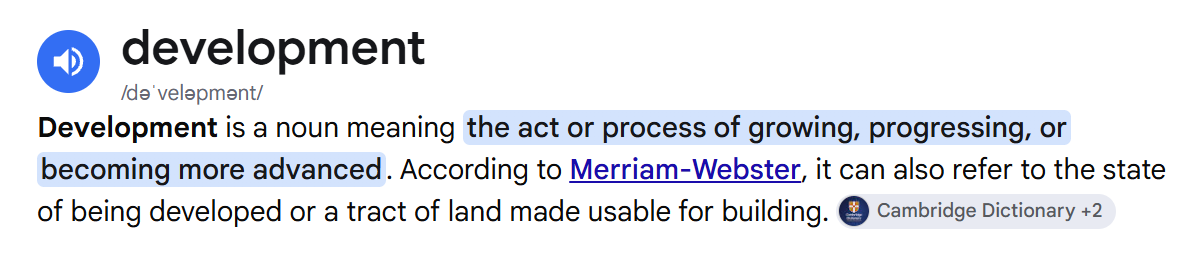
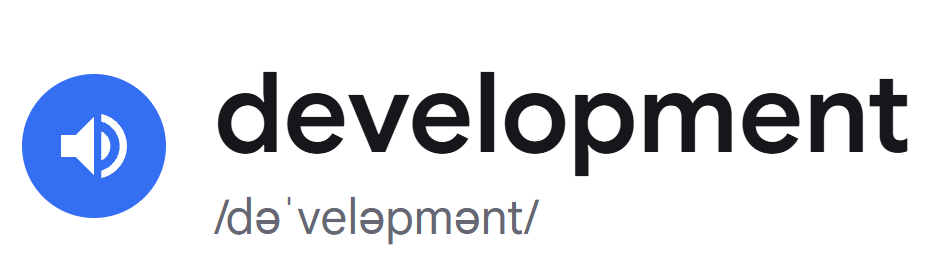
- Find the stress mark. Here, it tells you to stress "vel": duh-VEL-uhp-muhnt.
- Find the schwas. In "development," there are three, each one a short, lazy "uh": in the first syllable and in the last two.
- Listen and repeat. Click the little blue speaker (on Google Define, not on this page), listen to the word, and repeat it out loud many times, with the stress and the weak vowels in the right place.
The more you do it, the more aware you become of how words really sound in English. Little by little, you get better at predicting where the stress and the schwas will be in new words. Then you start recognizing English words more often in fast speech. Finally, as you more of these patterns, you get to use them more and more when you speak. And you know what the best part is? It works.
With a Paper Dictionary
And what if you have no phone or computer nearby? No problem. Take a good old paper dictionary. The symbols are exactly the same; only the little blue speaker is missing. Look at the word "definition" in the picture below: /ˌdɛfəˈnɪʃn/. The stress mark tells you to stress "ni": def-uh-NISH-n. The upside-down e shows you the schwa in the second syllable. (The small mark at the bottom, before "def," shows a lighter stress. You can ignore it for now.) Note that in most dictionaries, the stress mark comes before the stressed syllable, but in some, it comes after it. To find out, just look up a word you already know is stressed on the first syllable, like "money," for example (ˈmoney / monˈey), and it will tell you right away where the stress mark is placed in that particular dictionary.
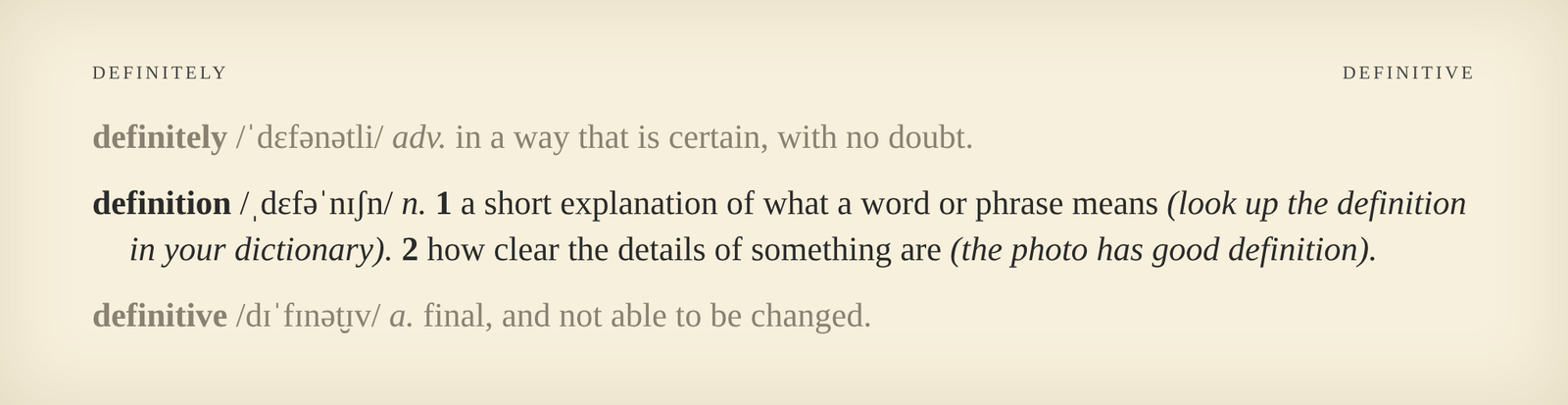
But since you cannot hear the word, what if you need to know how one particular sound is said in English, for a meeting tomorrow, for example? Paper dictionaries are all much the same: at the beginning, there is always a page that explains the phonetic symbols, with a common word next to each one. Many of my students struggle with the "i" in "determine." The dictionary shows /dɪˈtərmən/.
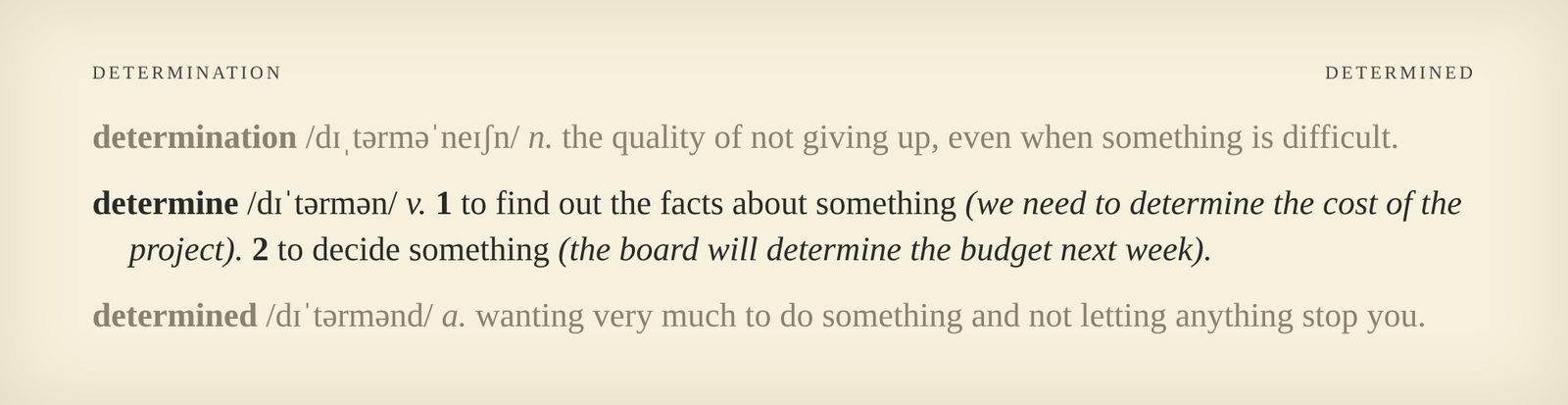
Look up the last vowel symbol, /ə/, on that first page: it is the sound in "about": the schwa.
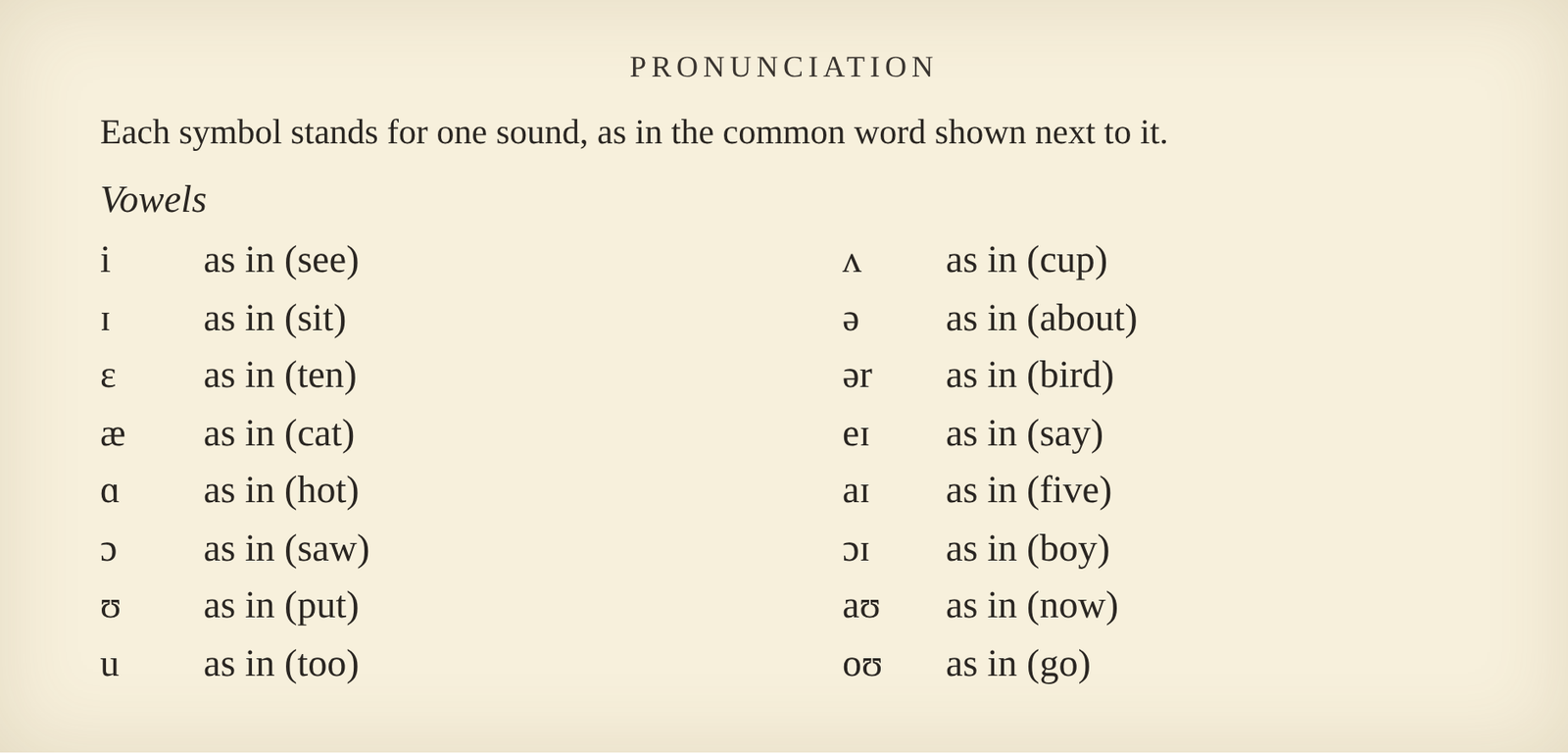
So you don't need to memorize all the symbols. When you need a specific sound, that's where you look.
In my experience, this is where learners gain something just as important as good pronunciation: a sense of control. They are no longer by how a word is pronounced or where the stress falls, because these two little symbols give them the answer in no time, anywhere, with or without technology. , I know, but it does the job just fine.
Conclusion
The IPA chart is not the , and it is not a magic key either. Its critics are right: you don't need to learn every symbol, and apps and online dictionaries can do a lot for you. Its supporters are right too: a few simple symbols can show you what spelling hides. The middle way is to use only what helps: the stress mark and the schwa, every time you look up a new word, online or on paper. So, are IPA symbols dead or alive? Neither, really. Who said you have to choose between GPS and the stars? Even today, sailors don't need to know every to enjoy a clear, starry sky. We all still love sailing under a bright night sky—on a ship with a good GPS, of course.